AI Art and the Question of Authorship
by Benji Friedman
When I generate an image using Stable Diffusion, who made it? Me, for writing the prompt and choosing the parameters? The engineers at Stability AI, for building the model? The millions of photographers and artists whose work trained it? The open-source community that refined it? All of us? None of us?
This is not an abstract philosophical question. It has real implications for how we value, credit, sell, and think about generative art. And the answer is more nuanced than either side of the debate usually admits.
The Naive Positions
There are two naive positions in this debate, and both are wrong.
The first: “The AI made it, not you. You just typed words.” This position treats the model as an autonomous creative agent and the human as a passive bystander. It ignores the enormous amount of creative labor involved in developing a vision, crafting prompts, selecting parameters, curating outputs, iterating toward a result, and contextualizing the work.
The second: “I made it entirely. The AI is just a tool, like a paintbrush.” This position understates the model’s contribution. A paintbrush does not have opinions about what to paint. A diffusion model does — it has learned aesthetics, biases, tendencies, and a vast visual vocabulary that it brings to every generation. The output is shaped by the model’s training as much as by the artist’s prompt.
A More Honest Framework
The reality is that generative AI art involves a distributed creative process. Multiple agents contribute at different stages:
- The training data creators — millions of artists and photographers whose work taught the model what images look like. Their contribution is real but diffuse — no single training image determines any output.
- The model architects — researchers who designed the architecture, loss functions, and training procedures. They created the possibility space but don’t determine what’s made within it.
- The synthographer — the person who conceives the work, navigates the model’s capabilities, makes aesthetic decisions, and curates the output into a final piece.
- The model itself — not a conscious agent, but a system with learned preferences that actively shapes every output in ways the prompter cannot fully predict or control.
Authorship in this context is not a single point — it is a gradient. The question is not “who made this?” but “what did each contributor bring, and whose creative vision does the final work express?”

Precedents in Other Media
This distributed authorship is not actually new — we just haven’t had to think about it so explicitly before.
A film director does not operate the camera, design the sets, write the score, or act the parts. Yet we call it “a Martin Scorsese film.” The director’s authorship comes from vision, selection, and orchestration — not from personally executing every element.
A photographer does not build the camera, design the lens, or create the light. The camera’s optics shape the image in ways the photographer cannot fully control. Yet we have no trouble calling a photograph the photographer’s work.
A musician using a synthesizer does not design the oscillators or write the DSP algorithms. The instrument has its own character that shapes every sound. Yet the music belongs to the musician.
In each case, authorship belongs to the person with the creative vision — the one who makes the aesthetic decisions, even when the tools contribute their own character to the output. The synthographer occupies this same position.
The Spectrum of Involvement
Not all AI art involves the same degree of human creative input. There is a spectrum:
At one end: someone types “cool picture” into a generator and posts the first result. The creative contribution is minimal. The model did most of the aesthetic work.
At the other end: an artist spends months developing a series — refining prompts through hundreds of iterations, training custom models on their own work, compositing multiple outputs, developing a coherent visual language, and curating a final body of work that expresses a specific artistic vision. The creative contribution is substantial and sustained.
Both of these are “AI art,” but they represent very different relationships to authorship. The medium does not determine the degree of creative involvement — the practice does.
Intent and Curation
I would argue that authorship in generative art rests primarily on two things: intent and curation.
Intent means having a creative vision — a direction, a concept, an aesthetic goal — that guides the generative process. It does not mean knowing exactly what the output will look like. (Painters often don’t know exactly what their painting will look like until it’s done either.) It means having a framework for evaluating whether an output serves your vision or not.
Curation means exercising judgment — selecting from many possible outputs the ones that resonate, that express something, that deserve to be elevated from “random generation” to “work.” This is not passive. It requires developed taste, visual literacy, and the ability to recognize when something unexpected is also something meaningful.
Together, intent and curation constitute a genuine creative practice. The model provides the raw material — the artist provides the meaning.
The Training Data Question
The most ethically charged aspect of the authorship debate concerns the training data. Models like Stable Diffusion were trained on billions of images created by other artists, often without explicit consent. Does this make every AI-generated image a derivative work? Does it constitute theft?
The legal and ethical questions here are genuinely complex and still being resolved. But from a creative standpoint, I think the analogy to human learning is instructive. Every human artist learns by looking at other art. Every photographer has internalized thousands of compositions they’ve seen. Every painter carries the influence of every painting they’ve studied. We do not consider this theft — we consider it education.
The difference with AI is scale and mechanism. A model processes billions of images rather than thousands, and it does so through mathematical optimization rather than conscious study. Whether this difference is morally significant is a question I don’t think has been settled. But I do think that the outputs of a well-prompted model are no more “stolen” from training data than a jazz musician’s improvisation is “stolen” from the recordings they grew up listening to.
My Position
I call myself the author of my generative work. Not because I deny the model’s contribution, but because the work expresses my creative vision. I chose the concepts. I developed the prompts through extensive iteration. I selected the parameters. I curated from thousands of outputs. I arranged the work into series with coherent themes. I decided what to show and what to discard.
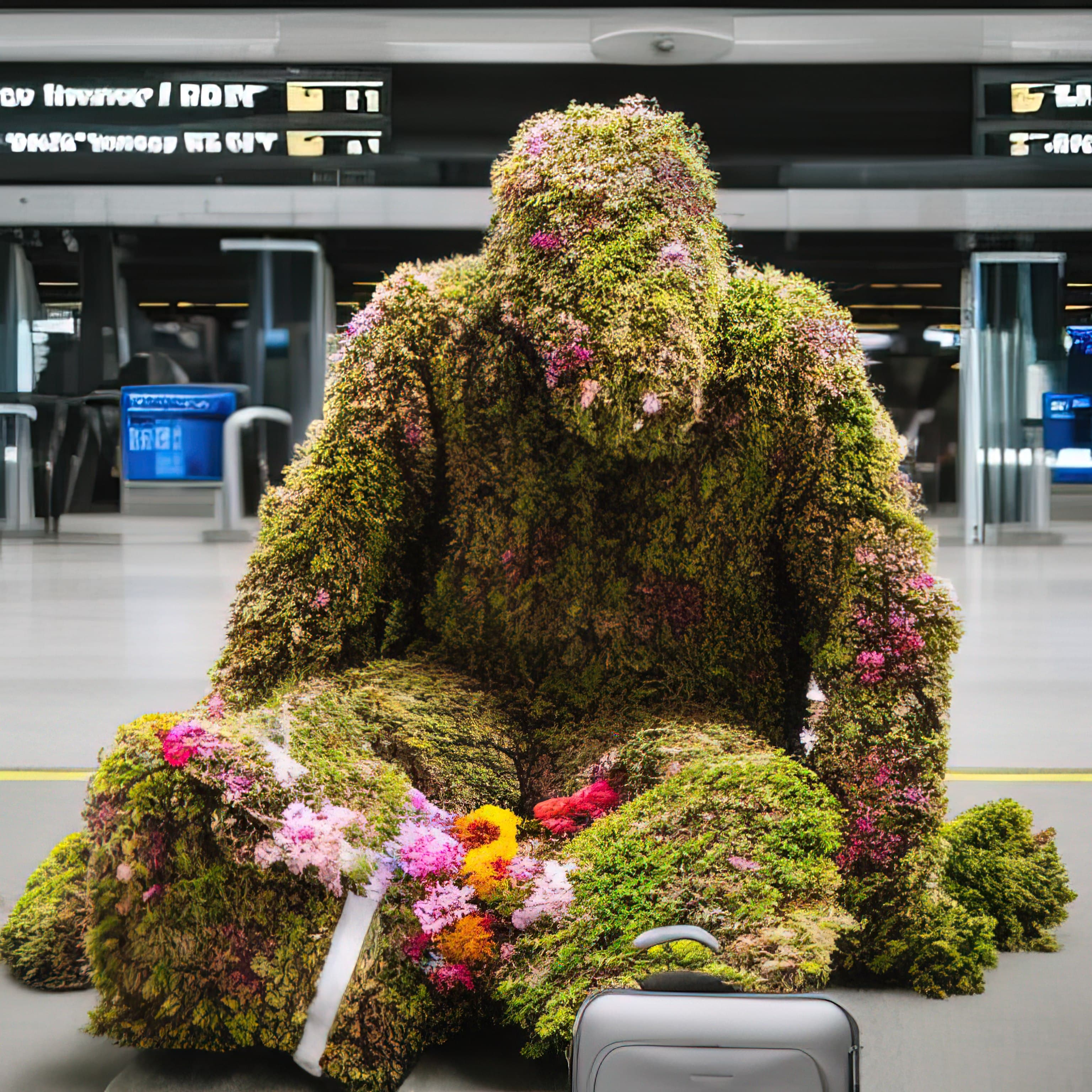
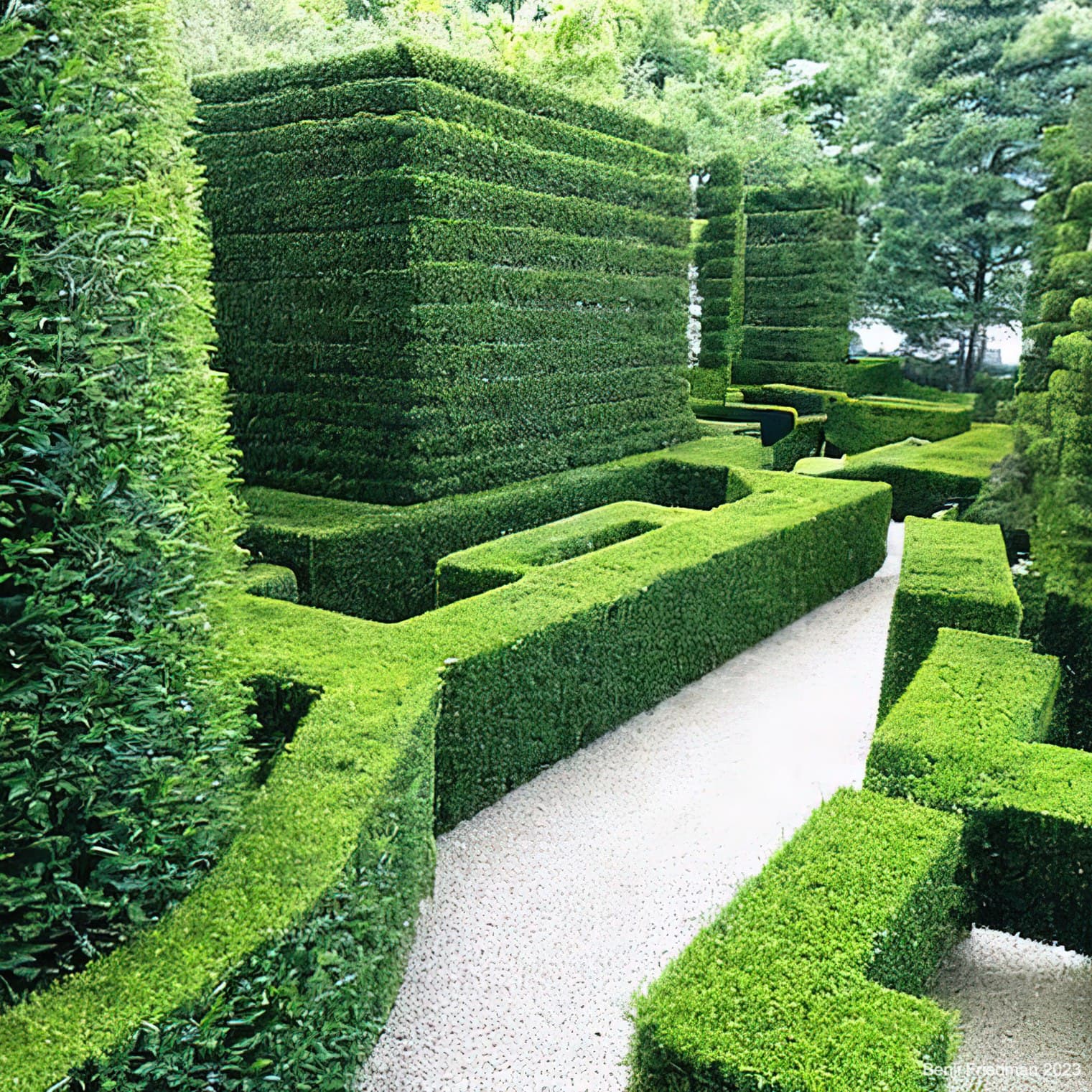
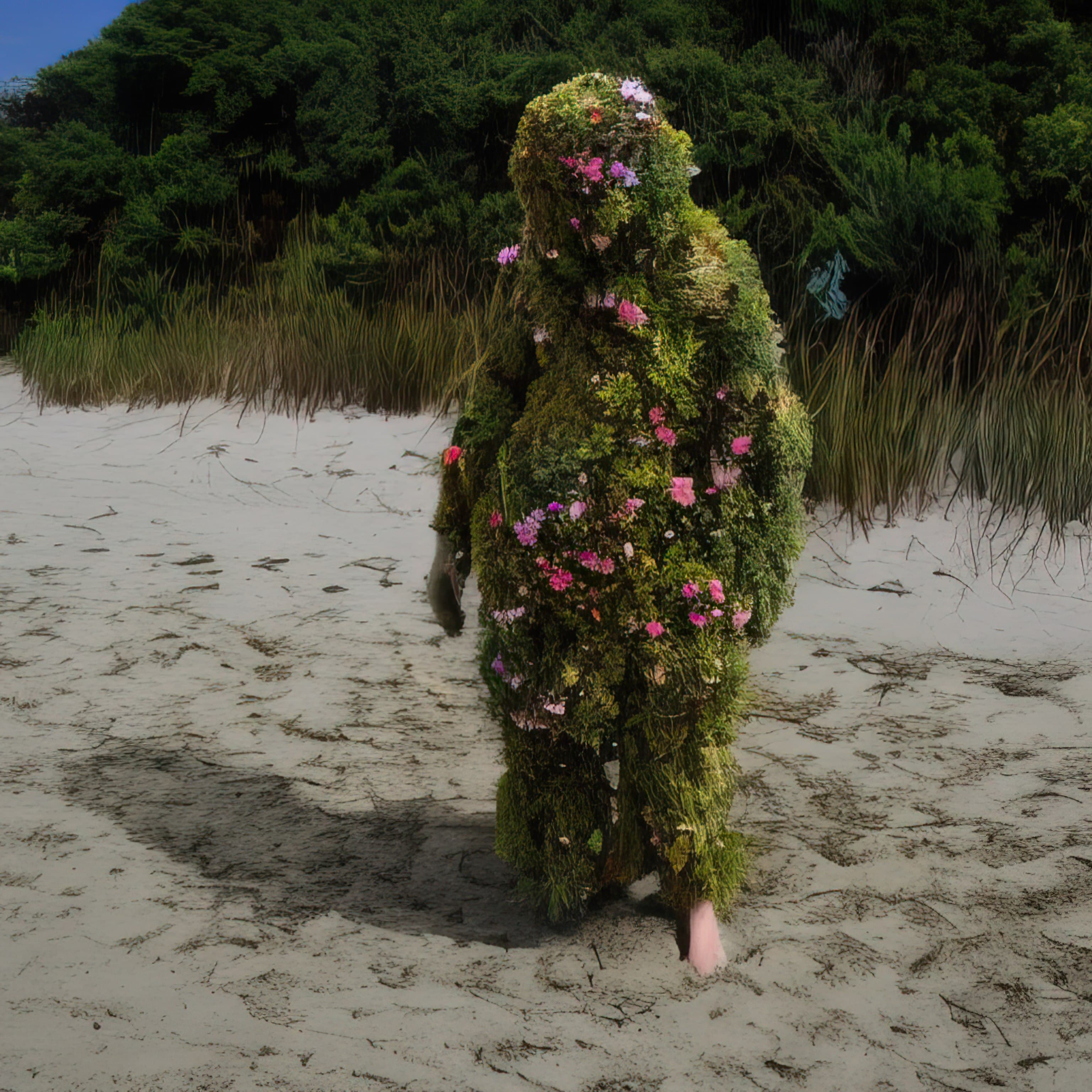
The model is my collaborator — a powerful, opinionated, sometimes surprising collaborator. But the artistic direction is mine. The series on this site — Plant People, Forest Mazes, Lamassu, Low CFG — these are my work, made with a tool that has its own voice.
That is not a contradiction. It is simply how creative tools have always worked — they shape the work as much as the artist does. The difference is one of degree, not of kind.

More on the practice of AI art: Synthography · CFG Scale · Chance and Randomness · New Archetypes · Behance