CFG Scale and the Spectrum of AI Art
by Benji Friedman
Every generative AI image exists somewhere on a spectrum. On one end: precise, controlled outputs that faithfully follow a text prompt. On the other: raw, abstract forms that emerge from the model’s own internal logic. The dial that moves between these two poles is called CFG scale — Classifier-Free Guidance — and understanding it is central to the practice of synthography.

What CFG Actually Does
When a diffusion model like Stable Diffusion generates an image, it starts with pure noise and gradually denoises it into a coherent picture. CFG scale controls how strongly the model’s output is pushed toward matching your text prompt versus following its own unconditional prediction of what an image “should” look like.
At CFG 1, the model barely considers your prompt at all. It generates what it “wants” to generate — shapes and patterns that emerge from the statistical average of its training data. At CFG 7–12 (the typical range), the model balances prompt adherence with natural image quality. At CFG 20+, the model aggressively forces the output toward the prompt, often at the cost of coherence — colors oversaturate, forms become exaggerated, artifacts appear.
The mathematical intuition: CFG amplifies the difference between the conditional prediction (with prompt) and the unconditional prediction (without prompt). Higher values mean more amplification, more “prompt signal” injected into the denoising process.
High CFG: The Directed Image
Most AI art you see online is generated at moderate-to-high CFG values. This is the territory of intentional image-making — where the artist has a specific vision and uses the prompt to realize it. A detailed prompt at CFG 7–12 produces images that feel photographic or illustrative, with clear subjects, coherent lighting, and recognizable compositions.
High CFG work is where synthography most resembles traditional creative direction. The artist writes a prompt like a brief, iterates on language and parameters, and arrives at an image that matches an internal vision. Series like Plant People, Forest Mazes, and Lamassu were all created in this mode — specific concepts explored through careful prompting at standard guidance values.
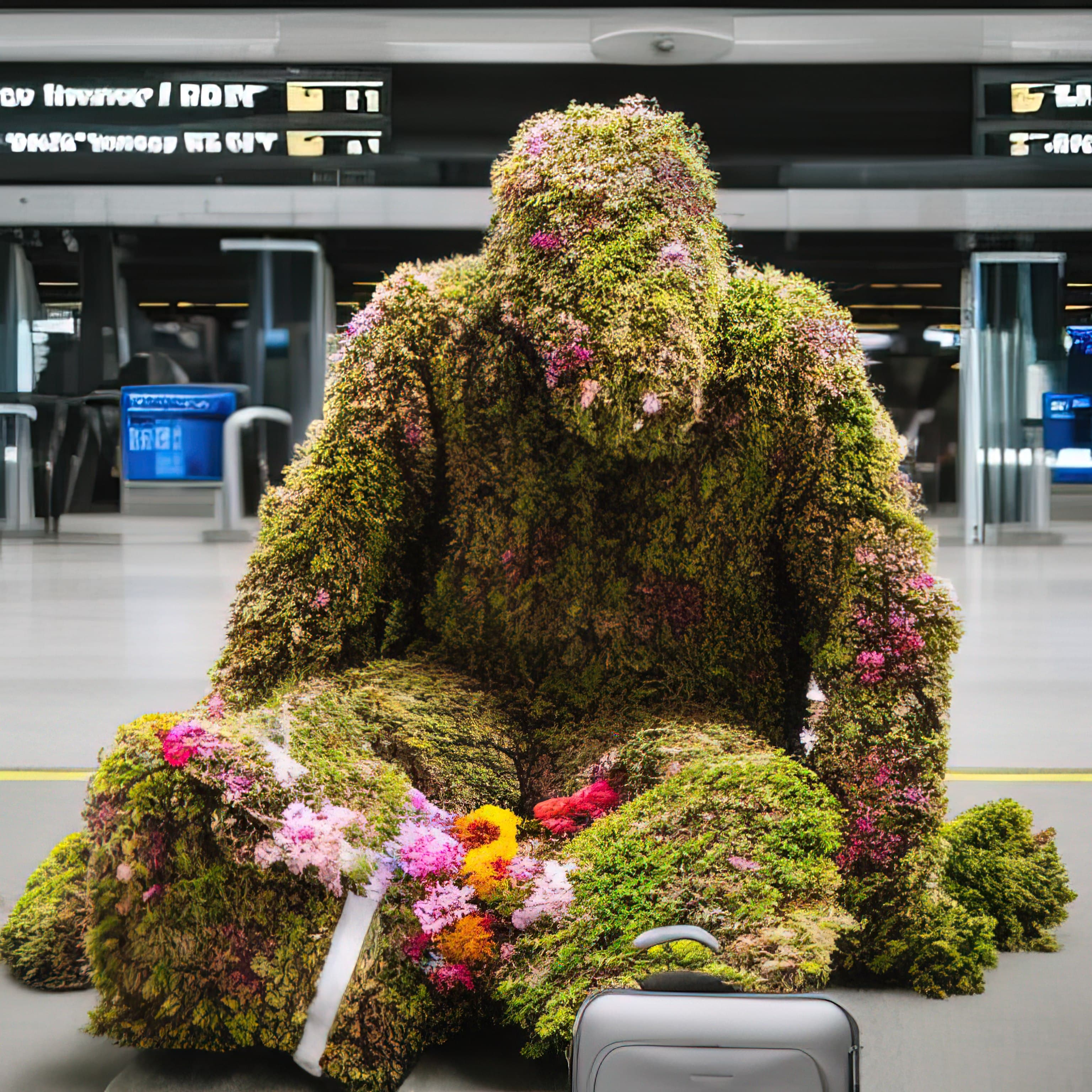
Plant People series — generated with standard CFG guidance, where the prompt directs the output toward a specific vision.

Lamassu series — ancient Mesopotamian guardian figures reimagined through directed AI generation.
Low CFG: The Model’s Dream
Turn the CFG dial down toward zero and something remarkable happens. The model stops trying to match your words and starts expressing its own learned understanding of what images are. The outputs become abstract, strange, and deeply compelling — proto-images that feel like visual summaries of the billions of pictures the model was trained on.
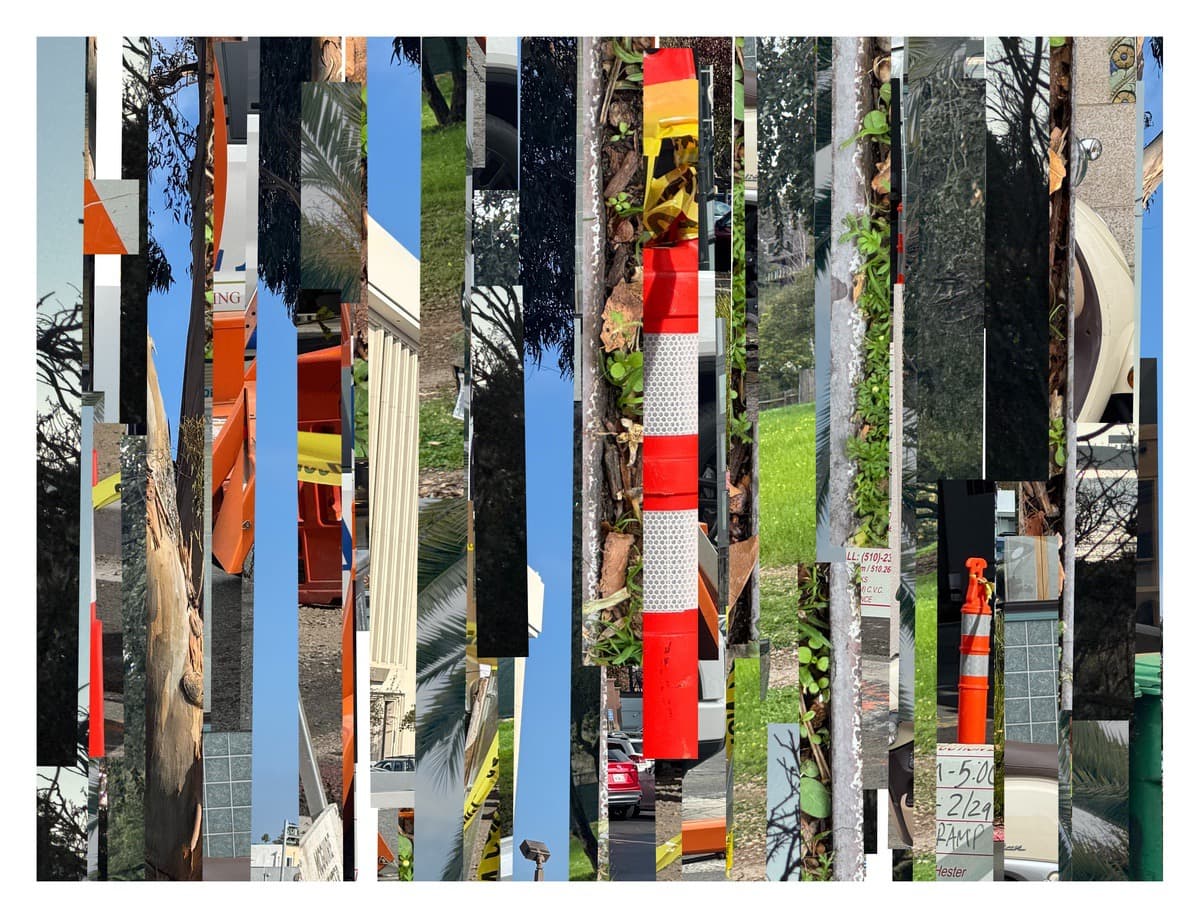
Low CFG images are not random noise. They have structure, recurring motifs, and a strange internal consistency. You start to see the model’s biases and preferences laid bare: certain color palettes recur, certain compositional tendencies emerge, certain textures dominate. These are the fingerprints of the training data, compressed and recombined without the constraint of human language.
Working in this space requires a different kind of artistic sensibility. You are not directing — you are curating. You generate hundreds of outputs and develop taste for which ones resonate. The skill is in recognition rather than specification.
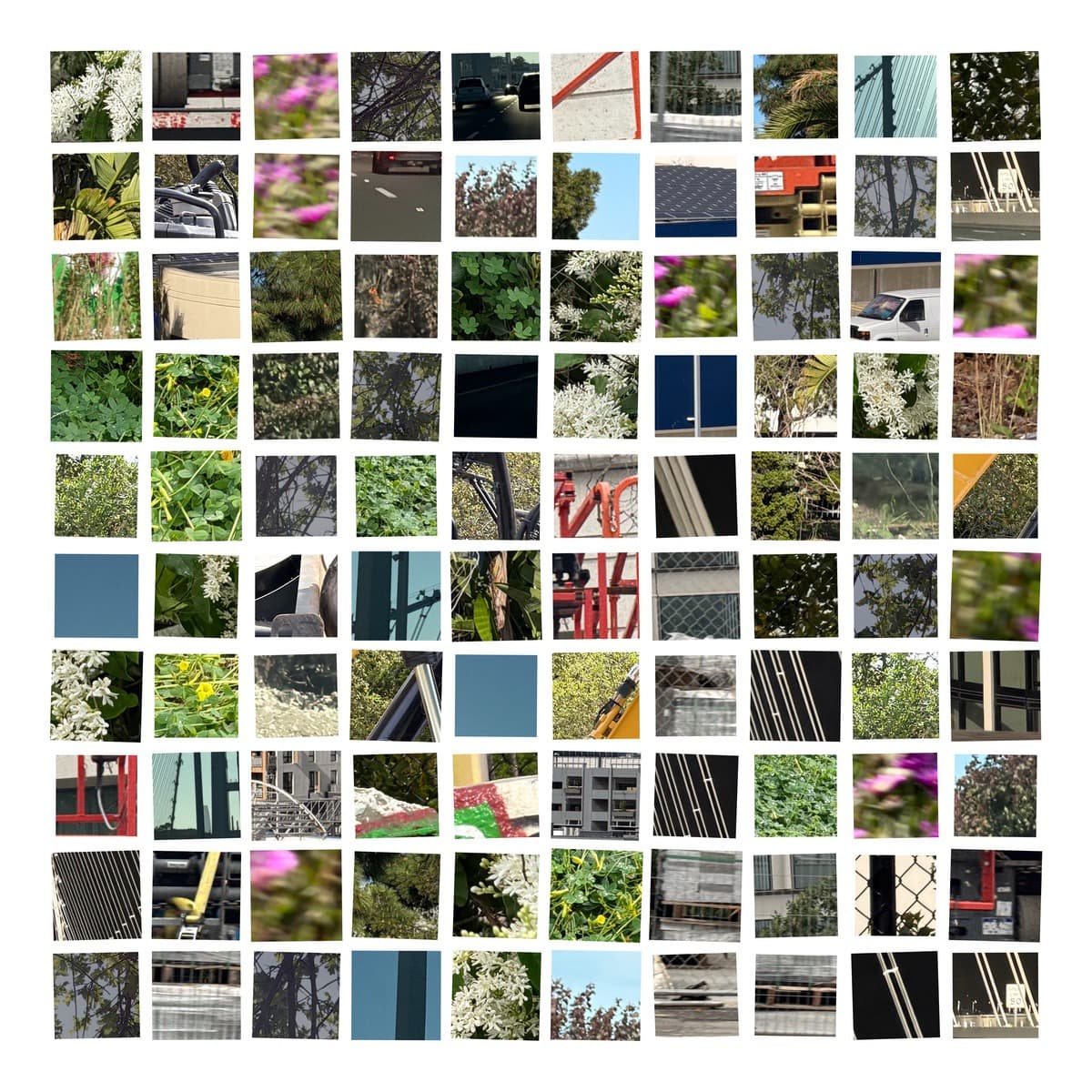
Low CFG output — the model generating without strong prompt guidance, revealing its internal visual logic.
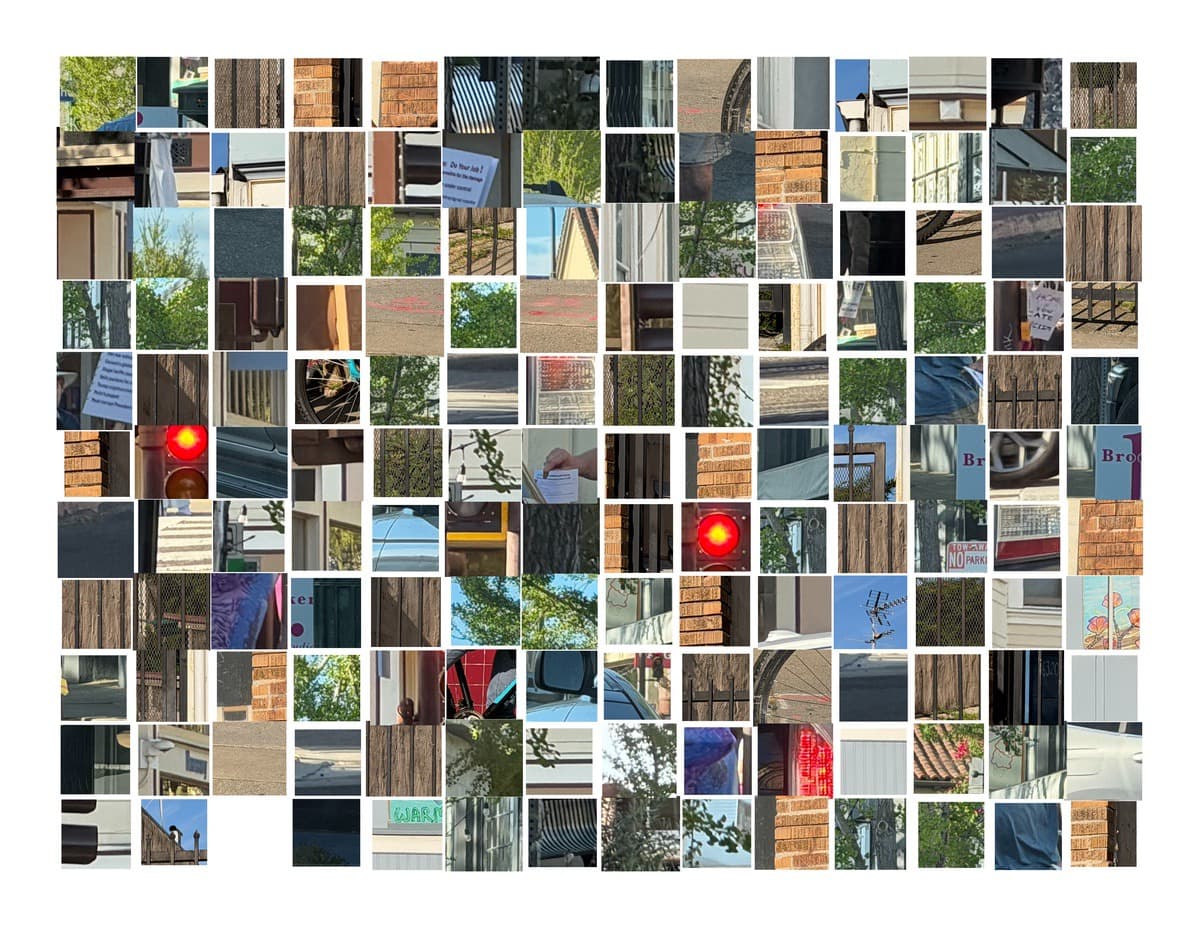
Another low CFG exploration — forms emerge that no prompt could have specified.
The Middle Ground
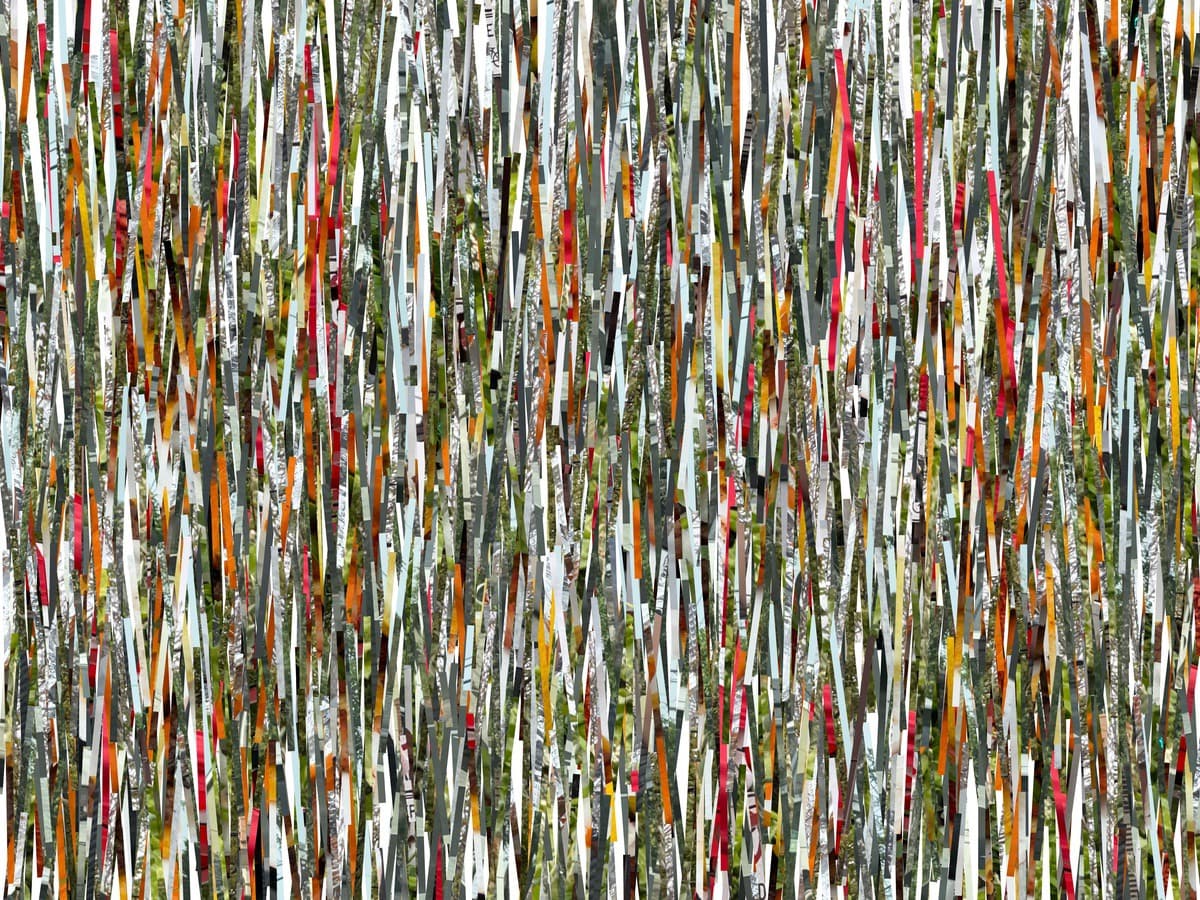
The most interesting territory is often between these extremes. At CFG 2–5, you get images that are loosely guided by a prompt but still heavily influenced by the model’s own tendencies. A prompt for “landscape” might produce something that has the vague structure of a landscape but rendered in impossible colors with dream-logic geometry. The prompt becomes a suggestion rather than a command.
This middle ground is where the collaboration between human and model is most apparent. Neither party is fully in control. The artist provides direction; the model interprets it through its own learned aesthetics. The result belongs to both.
CFG as Creative Philosophy
The choice of CFG scale is more than a technical parameter — it reflects a creative philosophy. High CFG artists treat the model as a rendering engine: they have a vision and use the tool to realize it. Low CFG artists treat the model as a collaborator or even an autonomous agent: they create conditions for emergence and curate the results.
Neither approach is superior. They represent different relationships between human intention and machine process. And many artists — myself included — move between these modes depending on the project. My Low CFG 2025 series is pure exploration, while series like Freeway Shipping Containers and Flower Trash are tightly directed.
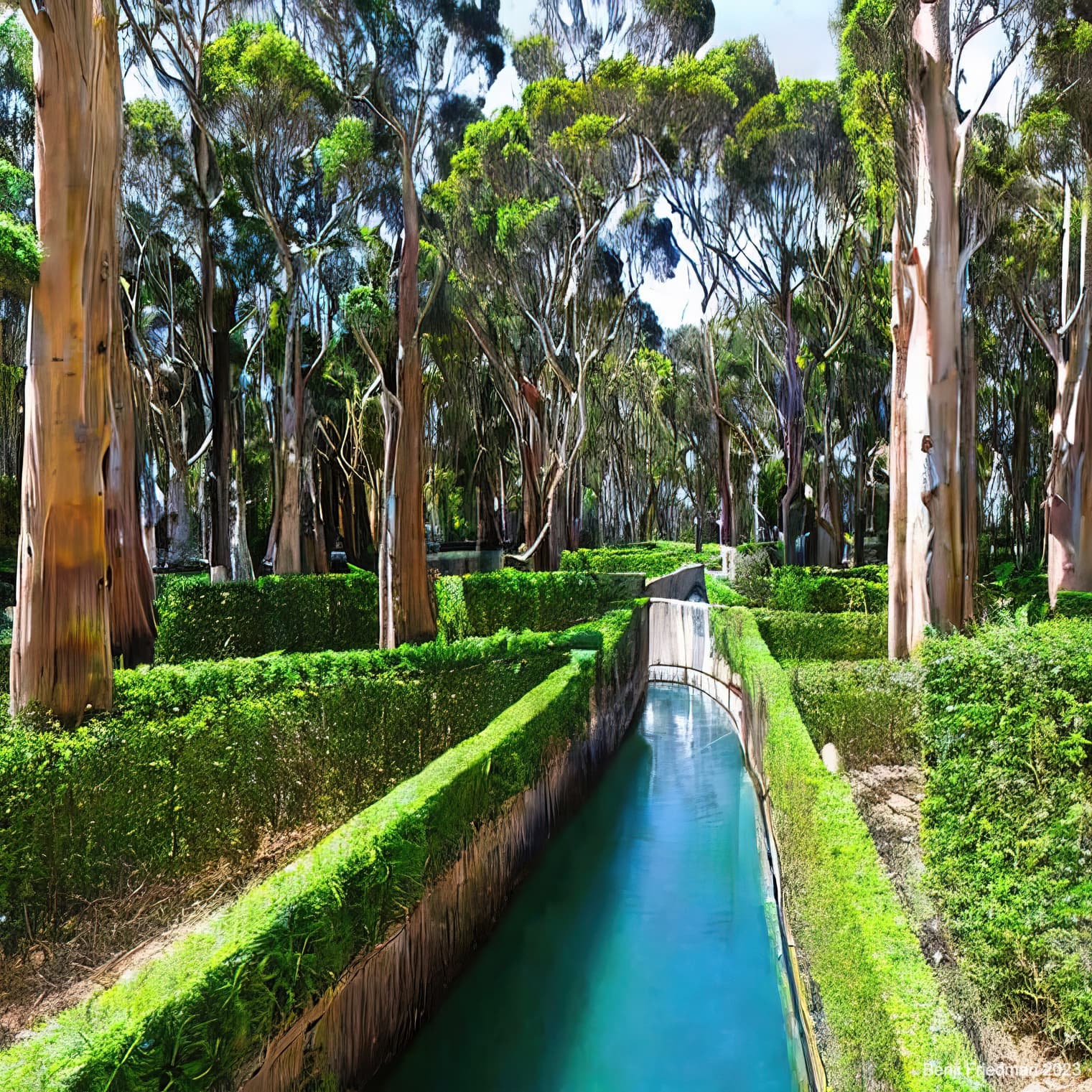
Forest Mazes — a directed series using standard CFG to explore a specific visual concept.
What Low CFG Reveals About the Model
There is something philosophically interesting about low CFG outputs. Stable Diffusion was trained on LAION-5B — a dataset of 5.85 billion labeled images scraped from the internet. When you remove the prompt constraint, what you see is a kind of visual average of human image culture. The model’s “dreams” are our collective visual memory, compressed and recombined.
Recurring motifs in low CFG outputs — faces that almost resolve, landscapes that blur between natural and urban, textures that feel organic but aren’t — tell us something about what the model has internalized. They are a mirror held up to the visual internet, reflecting back a distorted but recognizable image of how we collectively see the world.
In this sense, low CFG synthography is not just art-making — it is a form of archaeology. We are excavating the latent visual knowledge embedded in these models, surfacing patterns that no individual human put there but that emerge from the aggregate of billions of images.

Beyond the Binary
The high/low CFG distinction is a useful framework, but the reality is more nuanced. Modern workflows combine multiple CFG values within a single generation (dynamic CFG scheduling), use different guidance scales at different denoising steps, or blend outputs from different settings. The parameter space is vast and largely unexplored.
What matters is that CFG scale gives the synthographer a fundamental creative lever — one that has no analogue in traditional art-making. There is no equivalent in painting or photography of being able to smoothly dial between “I am in full control” and “the medium is in full control.” This is genuinely new, and it opens creative possibilities that we are only beginning to understand.
The images throughout this article represent points along this spectrum — from tightly directed to fully emergent. Together, they map a territory that did not exist before generative AI, and that continues to expand as models evolve.

Freeway Shipping Containers — high CFG, tightly prompted, realizing a specific surreal vision.
See more of my work across the CFG spectrum: Low CFG 2025 · Low CFG 2023 · Plant People · Forest Mazes · Lamassu · Behance