Series as Practice: Working in Generative Batches
by Benji Friedman
I don’t make single images. I make series — bodies of work that explore a single concept through dozens or hundreds of variations. This is not incidental to my practice. It is my practice. The series is the unit of meaning in generative art, not the individual image.
Why Series?
A single generative image is a sample. It tells you one thing the model can do with a given set of inputs. But it doesn’t tell you the range of what’s possible. It doesn’t reveal the boundaries of the concept, the variations the model finds within it, or the unexpected directions it might take.
A series does all of this. By generating many images within a constrained conceptual space, you map that space. You discover its edges, its peaks, its strange corners. You find the outputs that are typical and the ones that are exceptional. You develop an understanding of the concept that no single image could provide.
This is why my site is organized around series: Plant People, Forest Mazes, Lamassu, Flower Trash, Low CFG. Each one is an exploration of a territory, not a single destination.
Repetition Reveals
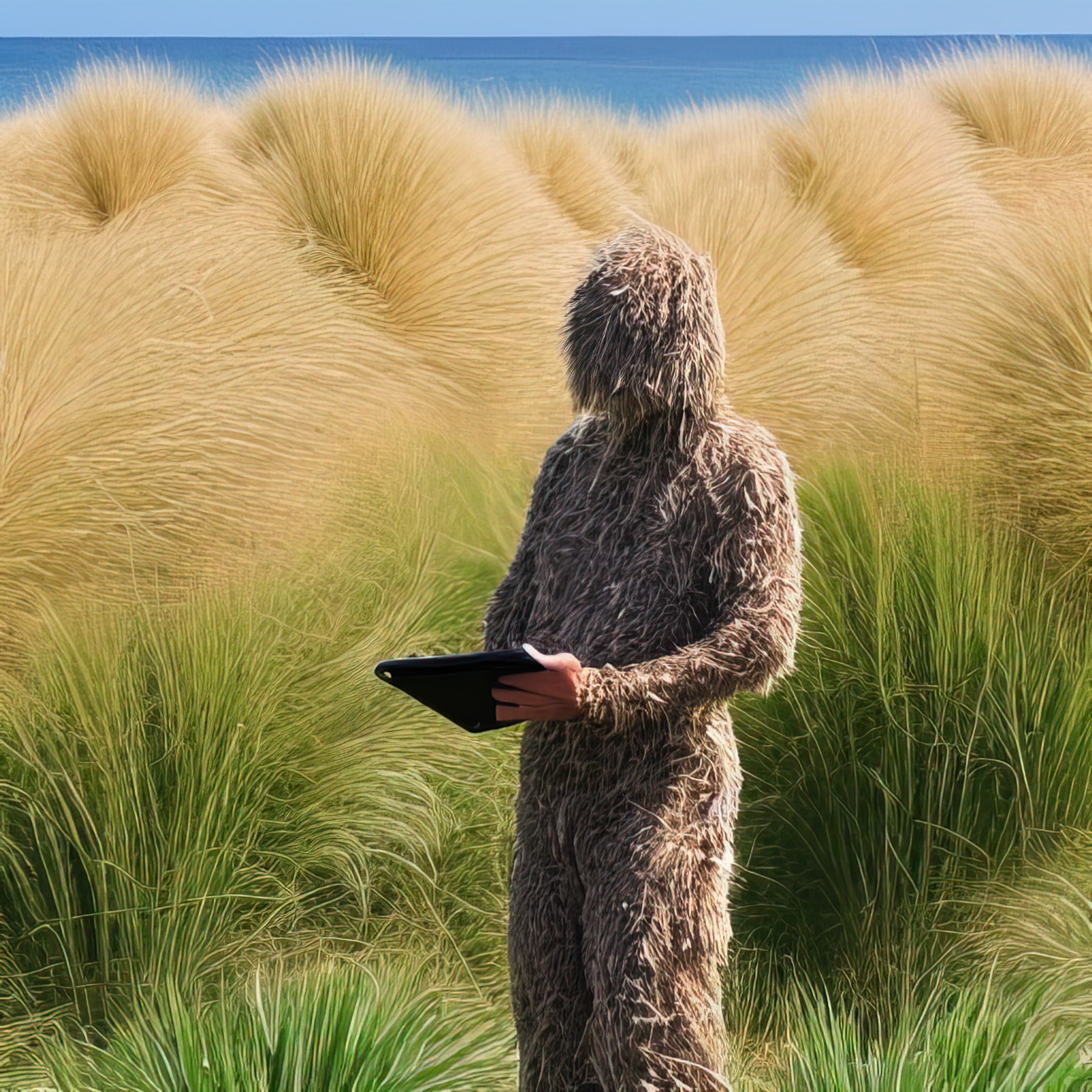
There is something that only becomes visible through repetition. When you generate fifty images of plant-human hybrids, you start to see patterns that no single image contains: the model’s preferred ways of merging organic forms, the color palettes it gravitates toward, the compositional structures it defaults to, the moments where it surprises itself.
These patterns are the real subject of the work. The individual images are evidence of something larger — a visual logic that only emerges through accumulation. A single Plant Person is interesting. Sixty Plant People reveal a language.
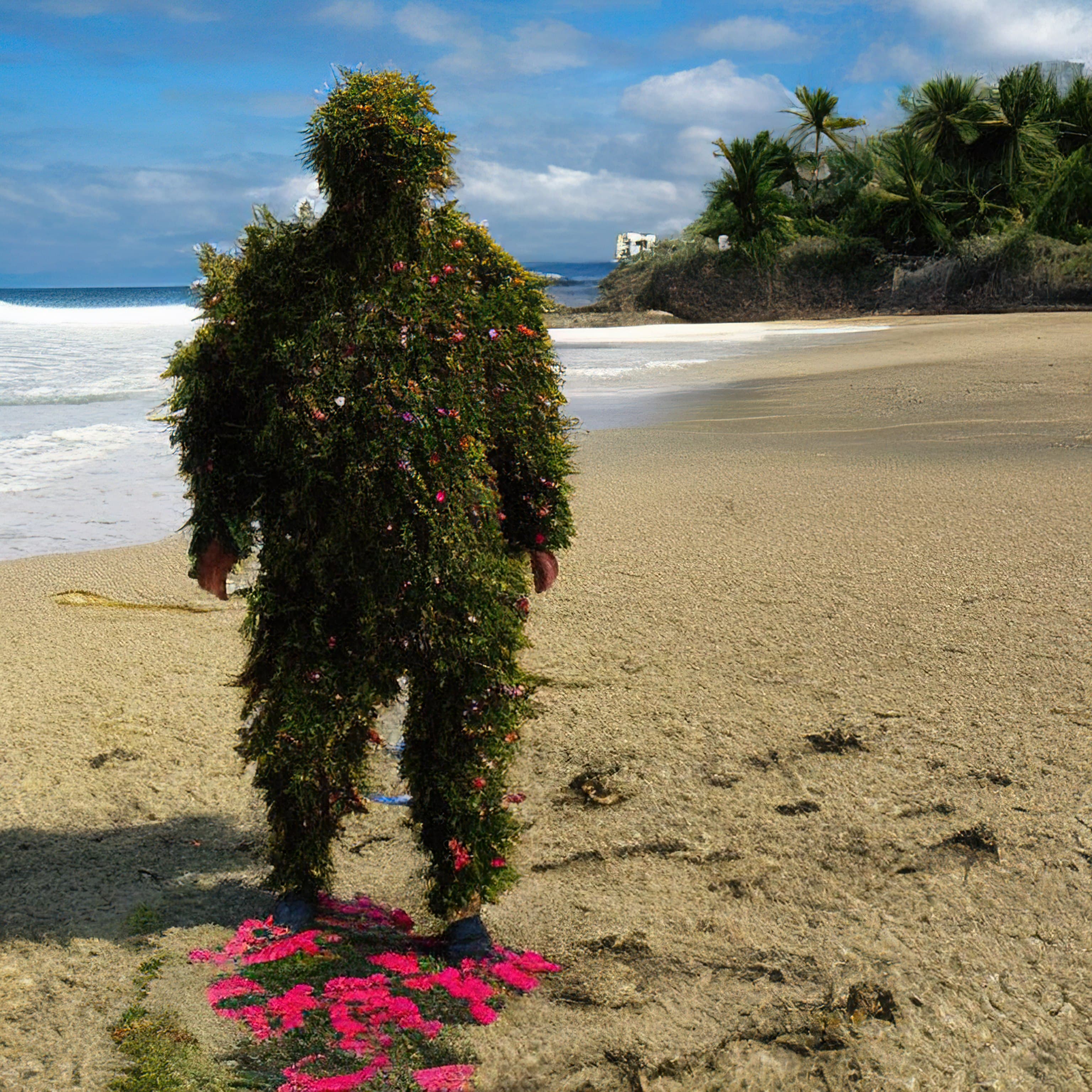
Plant People — one of sixty-five variations exploring the human-botanical boundary.
The Generative Advantage
Traditional artists also work in series — Monet’s haystacks, Warhol’s soup cans, Morandi’s bottles. But generative tools change the economics of series-making dramatically. Where Monet spent months painting thirty haystacks, a synthographer can generate three hundred variations in a day.
This is not a shortcut — it is a different mode of working. The speed of generation means you can explore a concept more thoroughly, push further into its edges, find variations that slower processes would never reach. The creative labor shifts from execution to curation: not “how do I make this?” but “which of these many possibilities best expresses what I’m after?”
The result is series that are both broader and deeper than what manual processes typically allow. You can afford to be more exploratory because the cost of each exploration is lower. You can afford to be more selective because you have more to select from.

Lamassu — each generation a different interpretation of the guardian archetype.
Constraints as Creative Fuel
Every series begins with a constraint — a concept, a prompt structure, a parameter range, a visual territory to explore. The constraint is what makes it a series rather than a random collection. It provides coherence while still allowing variation.
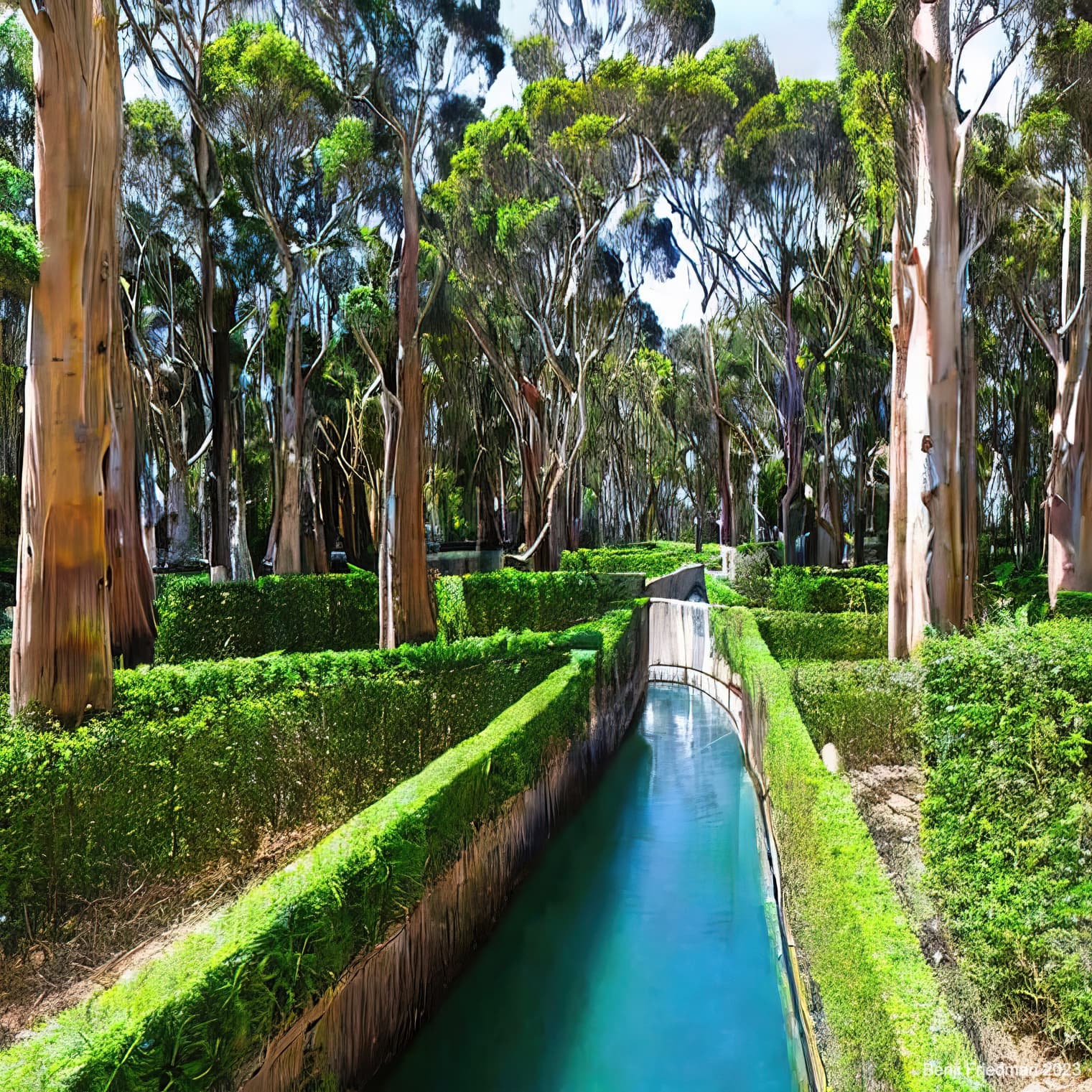
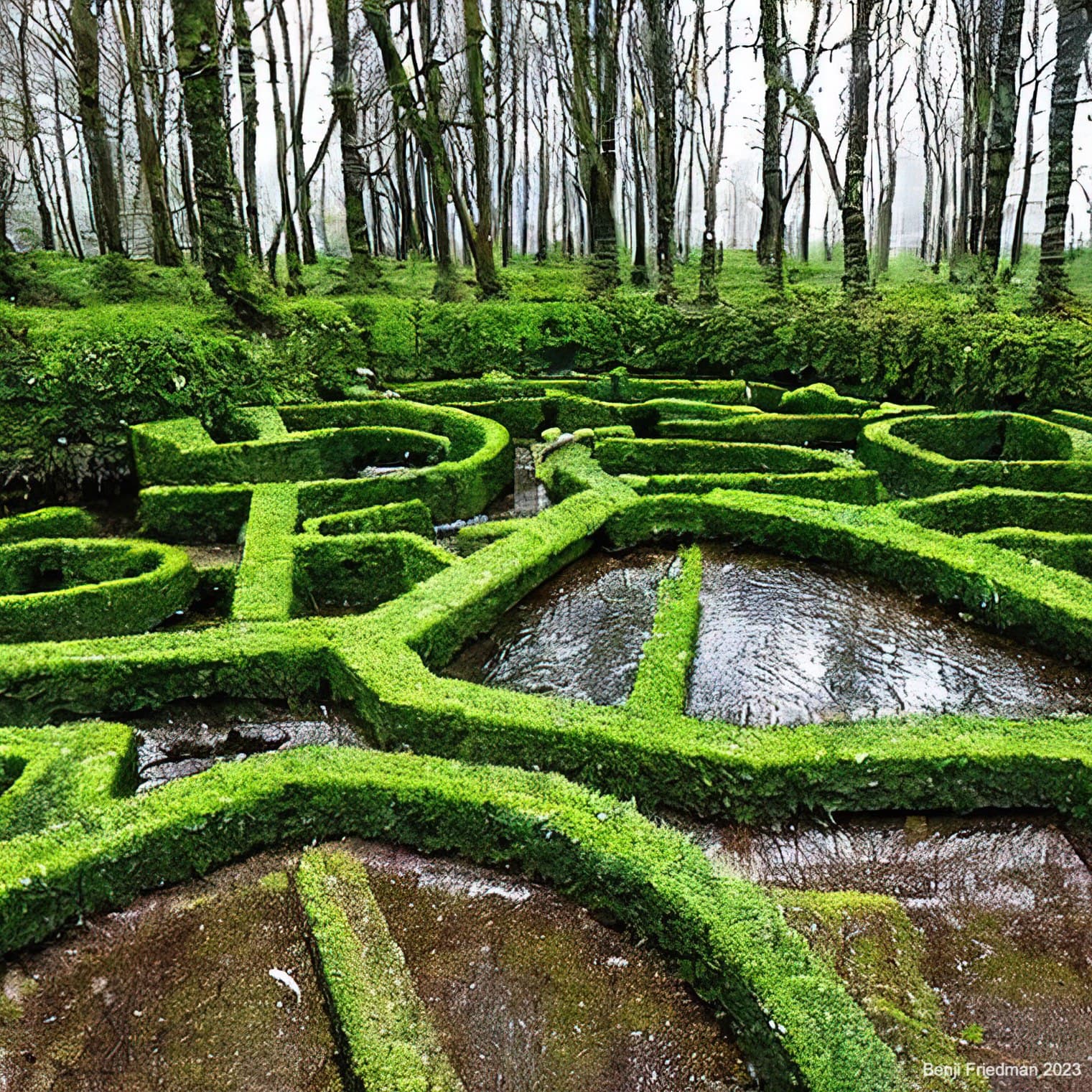
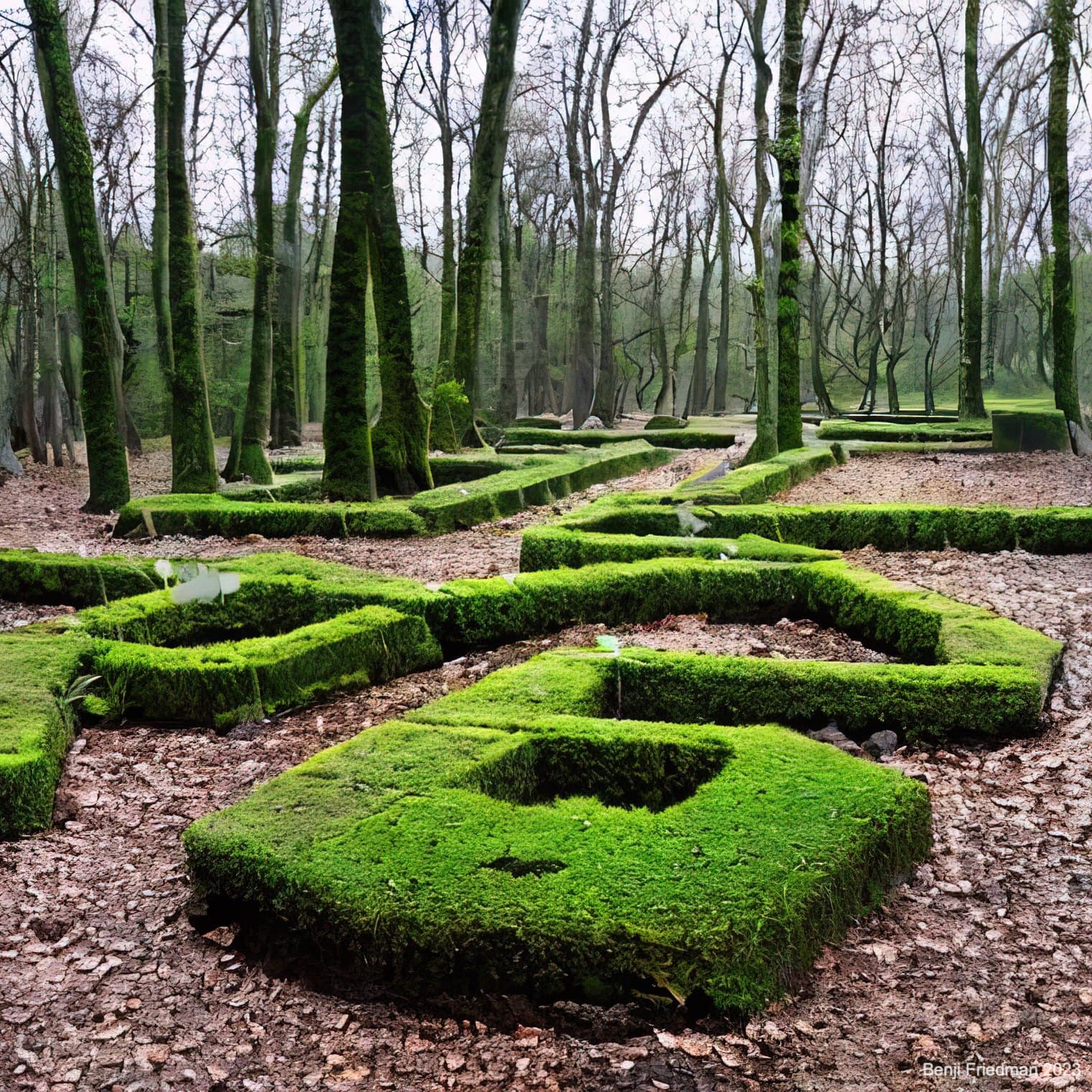
The Forest Mazes series is constrained to the intersection of natural forest imagery and labyrinthine structure. The Low CFG 2025 series is constrained by a specific parameter range — low guidance values that let the model drift. The Lamassu series is constrained to a specific subject — ancient guardian figures reimagined through AI.
Within these constraints, the model has freedom to vary. And it is in that tension — between the fixed concept and the variable execution — that the interesting work happens. Too much constraint and every output looks the same. Too little and the series has no identity. Finding the right balance is one of the core skills of working in generative batches.
Curation at Scale
Working in series means generating far more images than you show. For every image in my published series, there are ten or twenty that didn’t make the cut. This ratio is not waste — it is the process. The discarded images are the exploration that makes the selected ones possible.
Curation at this scale requires developing clear criteria — not rigid rules, but an internalized sense of what belongs and what doesn’t. What makes a Plant Person “good”? It’s not something I can fully articulate in words, but after generating hundreds of them, I know it when I see it. The series teaches you its own standards.
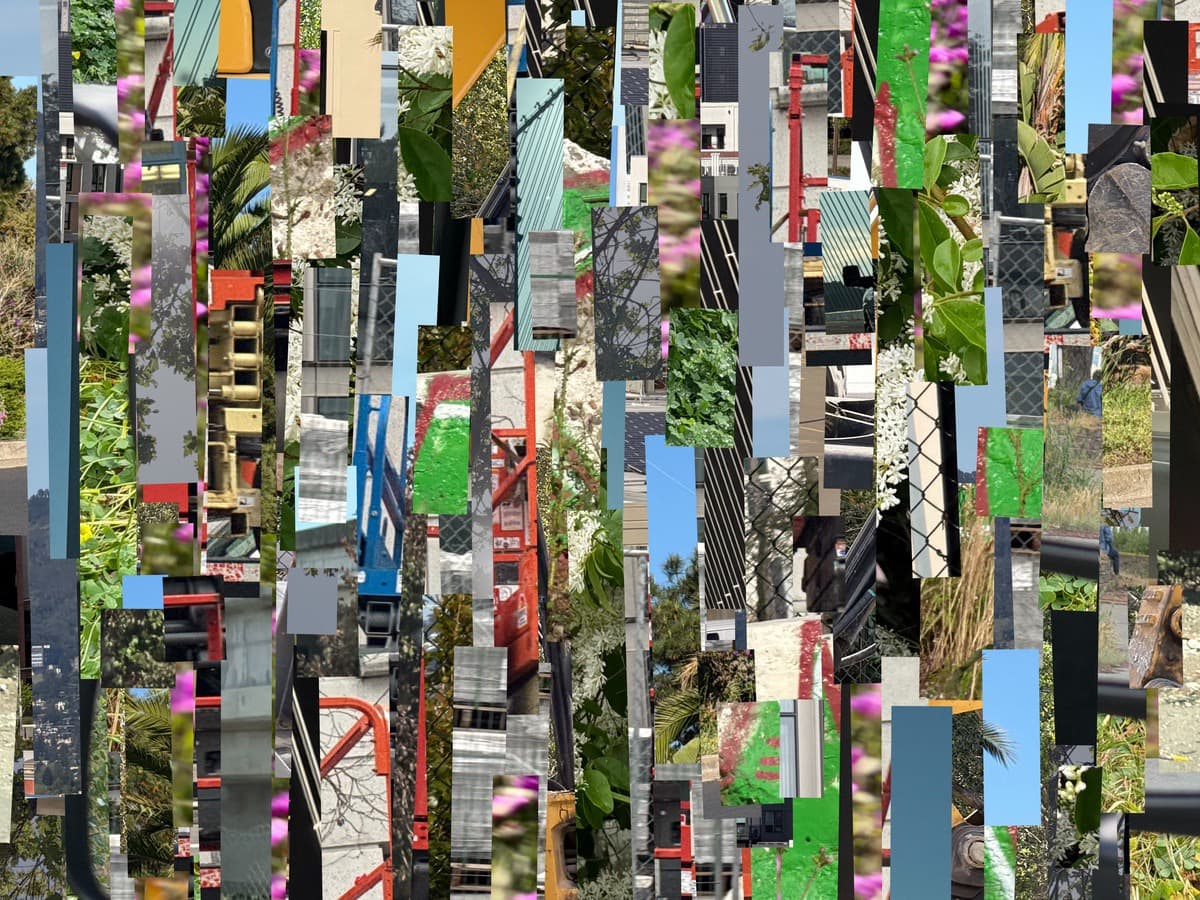
This is one of the underappreciated aspects of generative art practice. The public sees the curated output — thirty or sixty images that form a coherent body of work. They don’t see the hundreds of generations that were evaluated and rejected, the parameter adjustments that didn’t work, the dead ends that were explored and abandoned. The series is an iceberg — most of the work is invisible.
The Series as Statement
A single image makes a visual impression. A series makes a statement. It says: I found this territory, I explored it thoroughly, and here is what I discovered. The commitment to depth — to staying with a concept long enough to exhaust its obvious expressions and find its surprising ones — is itself a creative position.
In a medium where it’s easy to generate one image of anything and move on, choosing to generate a hundred images of one thing is a deliberate act. It says that this concept is worth sustained attention. It says that depth matters more than breadth. It says that the interesting work is not in the first generation but in the fiftieth — when you’ve pushed past the obvious and into the strange.
This is why I work in series. Not because it’s efficient — though it is — but because it’s the only way to truly understand what a generative concept contains. The single image is a postcard. The series is the journey.


Explore the series: Plant People · Forest Mazes · Lamassu · Low CFG 2025 · Flower Trash · All AI Art